元青花是中国瓷器史上最有名的品种之一。但你可能没想过一个问题:
它为什么不像中国瓷器?
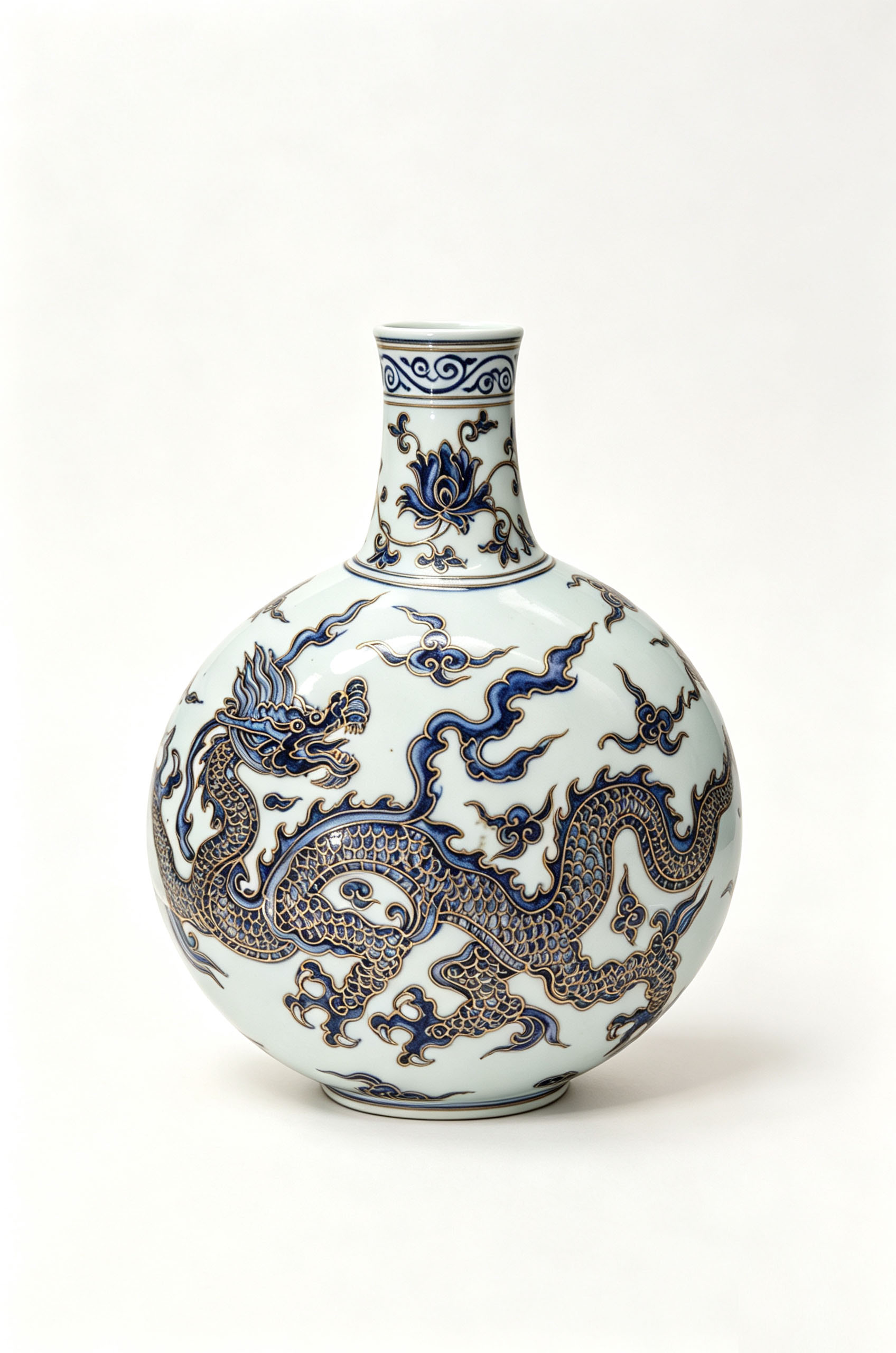
装饰密得几乎没有留白、纹样层层叠叠、颜色浓艳得几乎霸屏——这和中国审美的含蓄内敛,完全是两个方向。
答案在一座城市:泉州。
元代第一大港
1271 年,忽必烈建立元朝。此后一个世纪,中国的对外贸易中心转移到了泉州。
泉州在福建东南沿海,是天然的深水良港。马可·波罗在游记中称它为"世界第一大港",摩洛哥旅行家伊本·白图泰也留下了类似的记载。
元代在泉州设立市舶司,专门管理海外贸易。来自阿拉伯、波斯、印度、东南亚的商人云集于此,形成了庞大的外商社区。
这些外商的统称,叫"色目人"——这是元代对西域、中亚、西亚各族的统称。
色目商人带来了什么
色目商人来中国,不只是买卖。他们带来了三件事,直接改变了中国瓷器的样子。
第一,原料。波斯钴料。这种颜料中国本来没有,也烧不出那种浓艳的蓝色。色目商人把它从波斯运来,成了元青花最重要的物质基础。
第二,纹样。伊斯兰装饰的审美。多层次的横向分割、满铺的植物纹、缠枝莲、几何边饰——这些在伊斯兰世界早就成熟,但中国瓷器之前没见过。
第三,订单。中东的市场需求。色目商人不只是把货运出去,他们还带着具体的定制要求——什么器型、什么纹饰、什么尺寸、多少数量。这本质上是"来样定制"。
三件事加在一起,就是元青花诞生的全部条件。
为什么是"满"和"蓝"
理解元青花,要先理解伊斯兰装饰艺术。
伊斯兰艺术忌讳偶像崇拜,所以不用人物像。取而代之的,是繁密的植物纹、几何纹、书法装饰。它的视觉原则是"密铺"——尽可能铺满,不留空白。
再加上中东的气候和建筑——清真寺、宫殿、大宅,都是大面积的墙面和穹顶。这些空间需要"满铺"的装饰来填满。
所以中东客户订瓷器的时候,要的就是:满、密、蓝、大。
元青花里那种特别的"层层分割"(横向的窄带纹饰把器身切成好几段)、"缠枝莲"(循环的藤蔓纹)、"菱形开光"(用菱形框开一扇窗,中间画图案)——这些全是伊斯兰装饰的语法。
中国画讲究留白,伊斯兰装饰讲究密铺。元青花里的审美,是后者。
泉州之后,青花没再那么蓝
1368 年,明朝建立。此后海禁政策时松时紧,泉州的地位逐渐被月港、广州取代。
与此同时,元青花那种浓艳发色,也慢慢变了。
明代永宣时期还保留了一段时间的浓艳,之后苏麻离青越来越少,国产钴料逐渐取代。青花发色从浓艳转向淡雅,从"满密"转向"疏朗"。
到了成化、弘治时期,青花已经完全是另一种气质——清雅、疏淡、文人味。而这,才是我们通常说的"中国青花"。
所以从某种程度上说:元青花是"混血青花",明清青花才是"纯粹中国青花"。
而混血青花的诞生地,就是那座色目商人云集的泉州。
泉州今天已经不再是港口主角。
但如果你走进泉州的清净寺、灵山圣墓、海外交通史博物馆,仍能看到元代色目人留下的痕迹。
他们不仅带来了香料、宝石和钴料,也带来了一套审美。
而元青花,就是这套审美在中国瓷器上留下的指纹。
Yuan blue-and-white is one of the most famous categories in Chinese porcelain history. But you may not have asked:
Why doesn't it look like Chinese porcelain?
Decoration so dense there is almost no empty space. Motifs layered and re-layered. Colour so rich it fills the whole surface. Chinese aesthetics usually prefer restraint and empty space — the opposite of this.
The answer lies in one city: Quanzhou.
The Greatest Port of the Yuan
In 1271, Kublai Khan founded the Yuan dynasty. Over the next century, China's foreign-trade centre shifted to Quanzhou.
Quanzhou sits on the southeast coast of Fujian — a natural deep-water harbour. Marco Polo called it "the greatest port in the world". The Moroccan traveller Ibn Battuta left a similar account.
The Yuan established a maritime trade bureau in Quanzhou, dedicated to overseas commerce. Merchants from Arabia, Persia, India, and Southeast Asia gathered here, forming a large foreign merchant community.
These foreign merchants were collectively called "Semu" — a Yuan-era term for various peoples from the Western Regions, Central Asia, and West Asia.
What the Semu Merchants Brought
Semu merchants did not just come to buy and sell. They brought three things that changed the look of Chinese porcelain.
First, raw material. Persian cobalt. Chinese sources did not produce this pigment and could not fire that rich blue. Semu merchants shipped it from Persia — the essential material base of Yuan blue-and-white.
Second, motifs. The aesthetics of Islamic decoration. Multi-layered horizontal divisions, all-over floral scrolls, scrolling lotus, geometric borders — all mature in the Islamic world long before, but new to Chinese porcelain.
Third, orders. Middle Eastern market demand. Semu merchants did not just carry goods out; they brought detailed customisation requirements — form, decoration, size, quantity. This was, in essence, "made to order".
Three things together produced the conditions for Yuan blue-and-white.
Why "Dense" and "Blue"
To understand Yuan blue-and-white, you first need to understand Islamic decorative art.
Islamic art avoids idolatry, so it does not use human figures. Instead, it uses dense floral scrolls, geometric patterns, and calligraphy. Its visual principle is "all-over": fill every available space, leave no blank.
Add to that the climate and architecture of the Middle East — mosques, palaces, and grand houses with large wall surfaces and domes. These spaces demanded all-over decoration.
So when Middle Eastern clients ordered porcelain, what they wanted was: dense, layered, blue, large.
That special quality of Yuan blue-and-white — horizontal bands cutting the body into segments, scrolling lotus, lozenge-shaped reserves framing small scenes — all of this is Islamic decorative grammar.
Chinese painting values empty space. Islamic decoration values all-over density. The aesthetic inside Yuan blue-and-white is the latter.
After Quanzhou, Blue Was Never So Blue Again
In 1368, the Ming dynasty was founded. Maritime prohibition policies went back and forth; Quanzhou's status was gradually replaced by Yuegang and Guangzhou.
At the same time, the rich tone of Yuan blue-and-white began to change.
During the Yongle-Xuande period of the Ming, the rich blue survived for a while. Then Sumali cobalt became scarcer and domestic pigments gradually took over. Blue shifted from rich to pale, from dense to spare.
By the Chenghua and Hongzhi reigns, blue-and-white had an entirely different character — quiet, sparse, literati. This is what we usually call "Chinese blue-and-white".
So in a sense: Yuan blue-and-white was a hybrid; Ming-Qing blue-and-white is purely Chinese.
And the birthplace of that hybrid was the port city where Semu merchants gathered: Quanzhou.
Quanzhou is no longer the main port it once was.
But walk into the Qingjing Mosque, the Lingshan Holy Tomb, or the Overseas Communications Museum, and you will still see traces of the Semu merchants.
They brought not just spices, gems, and cobalt — they brought an entire aesthetic.
Yuan blue-and-white is the fingerprint of that aesthetic on Chinese porcelain.