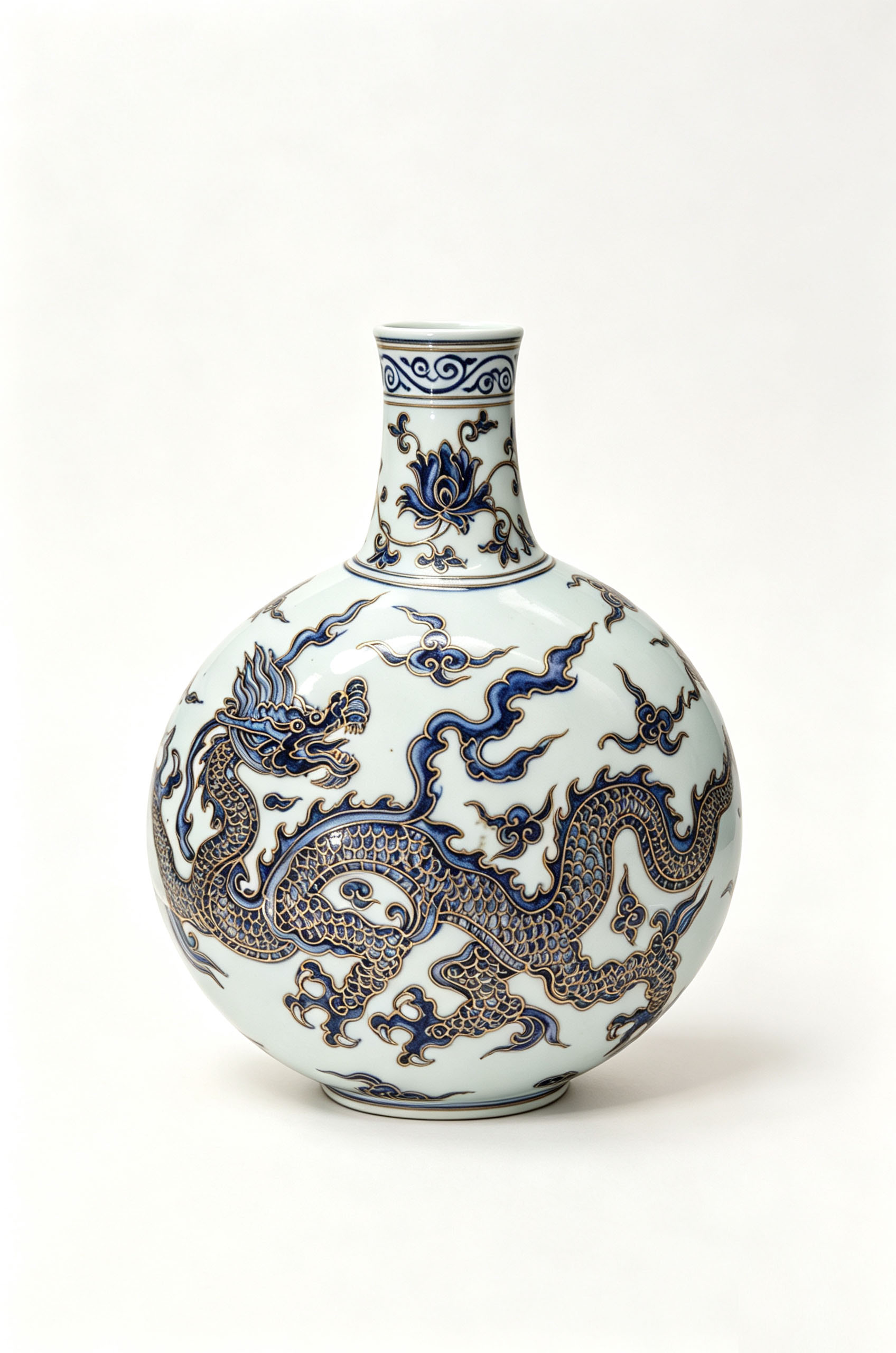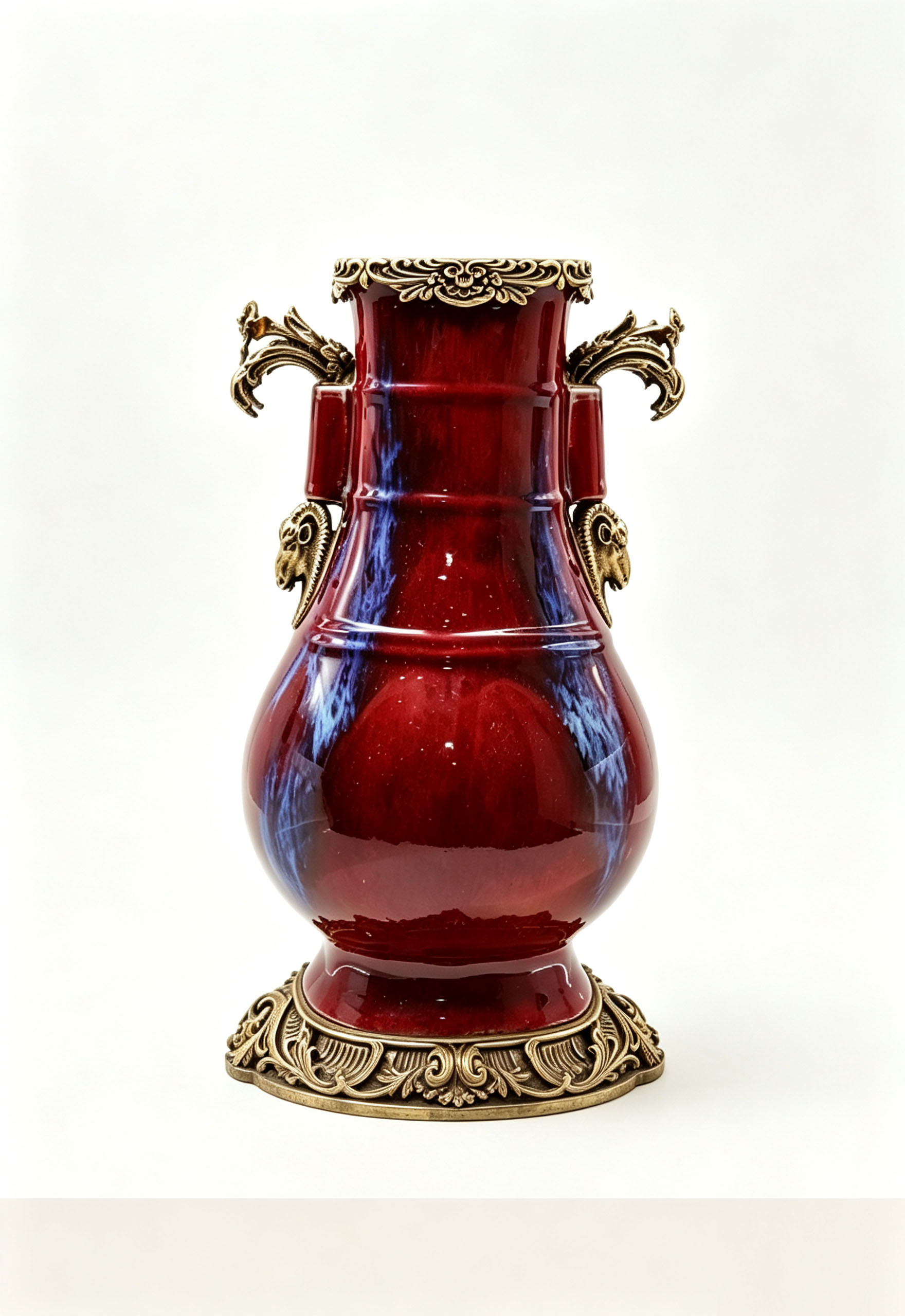
苏麻离青——郑和船队带回的那种钴料,让永乐、宣德青花蓝得惊心动魄。
但它究竟产自哪里?
要回答这个问题,得先弄清楚:"苏麻离青"到底是什么。
一个音译词
"苏麻离青"这四个字,不是中文。它是音译。
学者普遍认为,它对应波斯语 sulaimani 或阿拉伯语 sumawi——指的是波斯中部一个产钴矿的地方。
这个地方叫卡尚(Kashan)。
卡尚在今天的伊朗中部,德黑兰以南约 200 公里。中世纪时,这里是波斯最重要的钴矿产地,也是陶瓷重镇——本地产一种蓝白陶器,从 12 世纪就开始烧造。
为什么波斯有钴?
钴在地壳里其实并不罕见,但高品位的钴矿不多。
波斯中部——尤其是卡尚周边——恰好有丰富的高品位钴矿,含铁量高、含锰量低。这种成分烧出来的蓝色,浓艳深沉,和国产料完全不同。
更关键的是:波斯人不只是"有矿",他们早在伊斯兰时期(9 世纪起)就已经大规模烧造青花陶器。
也就是说,波斯本来就是青花技术的发源地之一。他们对钴料的理解、开采、加工,比中国早了四五百年。
所以当郑和船队抵达波斯湾时,他们面对的是一条成熟的产业链——有矿、有工、有商、有市场。
它怎么运到中国?
从卡尚到景德镇,是一段横跨半个亚洲的旅程。
第一段,陆路。钴矿从卡尚运到伊斯法罕,或者南运到波斯湾沿岸的港口——最主要的是霍尔木兹。
第二段,海路。从霍尔木兹出发,经阿拉伯海到印度西海岸的古里(Calicut)。古里是当时印度洋贸易最重要的中转港之一,郑和七次下西洋,几乎每次都到这里。
第三段,继续东行。从古里经锡兰、苏门答腊,到满剌加(马六甲)。满剌加是郑和在东南亚设立的重要据点。
第四段,进入中国。从满剌加北上,经南海到广州或泉州,再从陆路或内河运到景德镇。
整条路线,单程可能需要一年以上。这也是为什么苏麻离青价格昂贵——运输成本本身就是天文数字。
为什么后来没有了?
1433 年,郑和最后一次下西洋,卒于古里。
此后明朝转向海禁,宝船停建,远洋航线废弃。
但"海禁"只是直接原因。更深层的原因是:这条航线的政治价值下降了。
永宣时期,明朝需要通过下西洋建立朝贡体系、采购异域物产。到了宣德之后,朝廷认为这项支出不再划算——耗费巨大,回报有限。
于是,航线停了,钴料断了。
景德镇的窑工转而开发国产青料。平等青、浙料陆续登场,青花发色从浓艳转向淡雅,中国瓷器进入了另一个时代。
苏麻离青的故事,就此终结。
从波斯中部的一座矿山,到景德镇窑火边的一只瓷碗。
这条路线,横跨了半个亚洲,经过了六七个国家和地区,走了一年多。
钴料本身只是石头。但它的旅程,让两个文明产生了连接。
六百年后,我们看一件永宣青花,看到的不只是瓷器,还有这整条航线。
Sumali cobalt — the pigment Zheng He's fleet brought back, which made Yongle and Xuande blue-and-white so dazzlingly blue.
But where exactly did it come from?
To answer that, we first need to figure out what "Sumali cobalt" actually is.
A Transliterated Word
The four characters "苏麻离青" are not Chinese. They are a transliteration.
Scholars generally agree it corresponds to the Persian sulaimani or the Arabic sumawi — referring to a cobalt-producing place in central Persia.
That place is called Kashan.
Kashan lies in today's central Iran, about 200 km south of Tehran. In the medieval period it was Persia's most important cobalt source, and a ceramics centre in its own right — producing blue-and-white pottery from as early as the twelfth century.
Why Did Persia Have Cobalt?
Cobalt is not rare in the earth's crust, but high-grade cobalt ore is.
Central Persia — especially around Kashan — happened to have abundant high-grade cobalt, high in iron and low in manganese. Fired, it produced a blue of extraordinary depth and intensity, quite unlike any Chinese pigment.
More importantly: Persians did not just have ore. They had been firing blue-and-white pottery at scale since at least the ninth century, in the Islamic period.
In other words, Persia was itself one of the birthplaces of blue-and-white technology. Their understanding, mining, and processing of cobalt preceded China's by four or five centuries.
So when Zheng He's fleet reached the Persian Gulf, it encountered a mature industry — with mines, workshops, merchants, and markets already in place.
How Did It Reach China?
From Kashan to Jingdezhen was a journey across half of Asia.
First, overland. Cobalt moved from Kashan to Isfahan, or south to Persian Gulf ports — above all Hormuz.
Second, by sea. From Hormuz, across the Arabian Sea to Calicut on India's west coast. Calicut was one of the most important transit ports of the Indian Ocean trade — Zheng He stopped there on nearly every voyage.
Third, further east. From Calicut through Ceylon and Sumatra to Malacca. Malacca was a key base Zheng He established in Southeast Asia.
Fourth, into China. North from Malacca through the South China Sea to Guangzhou or Quanzhou, then overland or by inland waterway to Jingdezhen.
The whole route could take more than a year one way. That is why Sumali cobalt was so expensive — the transport cost alone was astronomical.
Why Did It Disappear?
In 1433, Zheng He made his last voyage and died at Calicut.
After that, the Ming turned to maritime prohibition. Treasure ships stopped being built, and the ocean routes were abandoned.
But "maritime prohibition" was only the immediate cause. The deeper reason: the political value of the route had declined.
During Yongle and Xuande, the Ming needed the voyages to build a tributary system and procure exotic goods. After Xuande, the court judged the expenditure no longer worthwhile — enormous cost, limited return.
The route stopped. The cobalt stopped.
Jingdezhen potters turned to domestic pigments. Pingdeng cobalt and Zhe cobalt entered the scene. Blue-and-white shifted from rich to pale, and Chinese porcelain entered another era.
The story of Sumali cobalt ended there.
From a mine in central Persia to a porcelain bowl by a Jingdezhen kiln.
The route crossed half of Asia, passed through six or seven countries and regions, and took more than a year.
Cobalt itself is just stone. But its journey connected two civilisations.
Six hundred years later, when we look at a piece of Yongle-Xuande blue-and-white, we are not just seeing porcelain — we are seeing the whole route.