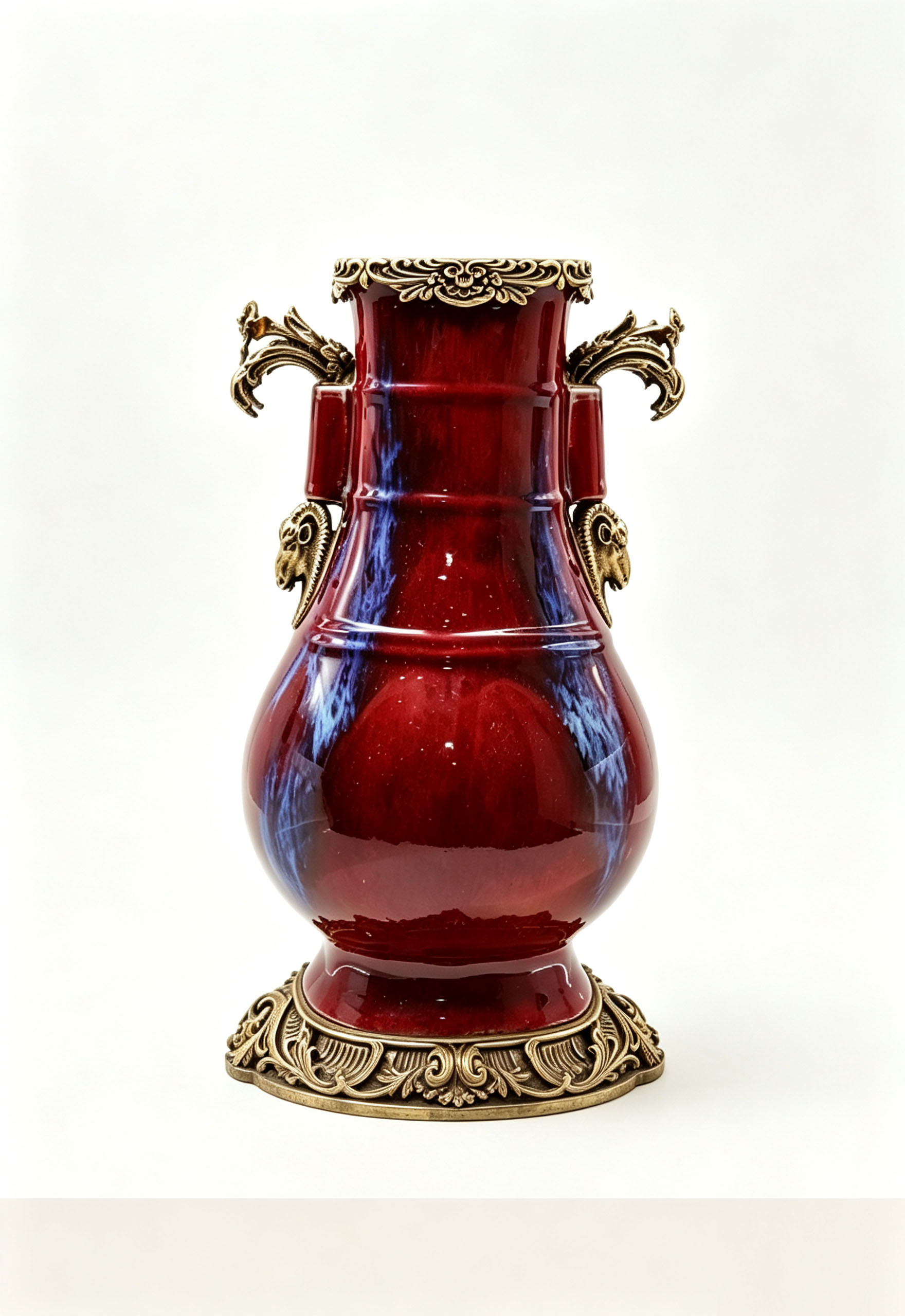
如果你十八世纪来到广州,从珠江往岸上看,会看到一排整齐的西洋建筑——长长的两层楼,带柱廊,挂着英国、法国、荷兰、丹麦、瑞典各国的旗子。
这就是"十三行"。
它不只是一个地名,而是清朝唯一合法的对外贸易区。从 1757 年到 1842 年,整整八十五年,中国的瓷器、茶叶、丝绸,几乎全部从这里出海。
一口通商
1757 年,乾隆皇帝下了一道命令:西洋商人只准在广州通商,其余口岸一律关闭。
这就是"一口通商"政策。
为什么是广州?
因为广州是南方最好的港口。它坐落在珠江口,背靠富庶的珠三角,远洋航线成熟,本地商人早已和东南亚、中东、欧洲有几百年的贸易经验。
更重要的:广州离北京够远。朝廷希望把洋人挡在帝国边缘,不要让他们靠近政治中心。
"十三行"到底是什么
"十三行"不是十三家商号。它是一个统称,指的是清政府在广州特许的对外贸易商行。
这些商行由广州本地的商人经营,官方叫"洋货行"或"外洋行"。他们负责:
一、垄断贸易。外国商人不能直接和中国内地做生意,必须通过十三行商人。买什么、卖什么、什么价格,都由十三行经手。
二、代缴关税。所有进出口货物,由十三行商人代外商向海关缴税。
三、担保行为。外商在广州的一切行为,由十三行商人担保。如果外商欠债或违法,行商要负责。
换句话说,十三行既是贸易公司,又是海关代理,还是外商的"监护人"。
这套制度让清政府省心:不用直接和洋人打交道,只需要管好几家商行就行。
外销瓷是怎么下单的
我们今天说的"外销瓷"或"广彩",很大一部分就是通过十三行下单的。
流程大致是这样的:
第一步,外商出样。欧洲商人把想要的图案画好——家族纹章、欧洲风景、神话故事、中国风花鸟——交给十三行商人。
第二步,转单景德镇。十三行商人把订单和样品寄到景德镇。景德镇窑工按样烧造白瓷或初步彩绘。
第三步,广州加彩。烧好的瓷器运到广州,在珠江南岸的作坊里,由广州画工再加彩、加金。这就是"广彩"。
第四步,装船出海。加彩完成的瓷器从黄埔上船,经澳门、马六甲、印度洋,运往欧洲。
整个流程,从下单到交货,通常需要一到两年。
这就是为什么今天你在欧洲古堡、英国庄园里看到的很多中国瓷器,图案里会有西方纹章——它们不是景德镇的原创,而是欧洲商人定制的。
1842 年之后
1842 年,《南京条约》签订,五口通商。广州的垄断地位结束。
上海、厦门、福州、宁波相继开埠。外商有了更多选择,广州不再是唯一入口。
十三行的行商制度随之瓦解。1856 年,第二次鸦片战争期间,十三行商馆区在一场大火中被烧毁。今天广州的"十三行"只是一个地名和一段记忆。
但它留下的外销瓷,成了中西交流史最重要的物证之一。
今天你在新加坡、香港、伦敦的拍卖行里看到的"广彩"瓷器,很多都来自那个八十五年的窗口期。
十三行只存在了八十五年。
但它塑造了一整代外销瓷的样子——那些带欧洲纹章、绘着西方风景的中国瓷器。
它们不是景德镇窑工的想象,而是两个世界对话的结果。
一口通商关闭了九十年后,我们依然能从这些瓷器上,看到那个开放的瞬间。
If you had come to Guangzhou in the eighteenth century and looked from the Pearl River towards the shore, you would have seen a row of Western-style buildings — long two-storey blocks with colonnades, flying the flags of Britain, France, the Netherlands, Denmark, and Sweden.
This was the "Thirteen Hongs".
It was more than a place name. It was the Qing dynasty's only legal foreign-trade zone. From 1757 to 1842 — eighty-five years — almost all of China's porcelain, tea, and silk went out through here.
The Single-Port Policy
In 1757, the Qianlong emperor issued an edict: Western merchants were permitted to trade only at Guangzhou. All other ports were closed.
This was the "single-port" policy.
Why Guangzhou?
Because it was the best port in the south. Located at the mouth of the Pearl River, backed by the wealthy Pearl River Delta, with mature ocean routes and local merchants who had centuries of trade experience with Southeast Asia, the Middle East, and Europe.
More importantly: Guangzhou was far enough from Beijing. The court wanted foreigners kept at the empire's edge, away from the political centre.
What the "Thirteen Hongs" Actually Were
The "Thirteen Hongs" were not thirteen firms. The name refers collectively to the licensed foreign-trade guilds in Guangzhou.
They were run by local Guangzhou merchants, officially called "foreign-goods houses" or "ocean houses". They were responsible for:
First, monopoly. Foreign merchants could not trade directly with the Chinese interior. They had to go through the Hong merchants. What to buy, what to sell, at what price — all mediated.
Second, customs. All import and export duties were paid on behalf of foreign merchants by the Hong merchants.
Third, surety. The Hong merchants vouched for the conduct of foreign merchants. If a foreigner defaulted or broke the law, the Hong merchant was liable.
In other words, the Hongs were simultaneously a trading company, a customs agent, and a guardian of foreigners.
This system saved the Qing government trouble: it did not have to deal with foreigners directly — only with a handful of firms.
How Export Porcelain Was Ordered
Much of what we now call "export porcelain" or "Canton ware" was ordered through the Hongs.
The process went roughly like this:
Step one, the design. European merchants prepared the design they wanted — family crest, European landscape, mythological scene, chinoiserie flora and fauna — and handed it to the Hong merchants.
Step two, the order travels to Jingdezhen. The Hong merchants sent the order and sample to Jingdezhen. Potters there fired the blank porcelain or applied the base painting.
Step three, decoration in Guangzhou. The fired porcelain came back to Guangzhou. In workshops on the south bank of the Pearl River, Canton painters applied enamel and gilding. This is "Canton ware".
Step four, shipped out. The finished porcelain left from Whampoa, passed Macau, Malacca, and the Indian Ocean, and reached Europe.
The whole cycle, from order to delivery, usually took one to two years.
This is why many Chinese porcelains in European castles and English country houses carry Western coats of arms — they were not Jingdezhen's invention, but European custom orders.
After 1842
In 1842, the Treaty of Nanjing was signed and five ports were opened. Guangzhou's monopoly ended.
Shanghai, Xiamen, Fuzhou, and Ningbo opened in turn. Foreign merchants had more choices; Guangzhou was no longer the only door.
The Hong system collapsed. In 1856, during the Second Opium War, the Thirteen Hongs factory district burned to the ground. Today, "Thirteen Hongs" is only a place name and a memory.
But the export porcelain it left behind became one of the most important material witnesses to East-West exchange.
Much of the "Canton ware" you see today in auction houses in Singapore, Hong Kong, and London came out of that eighty-five-year window.
The Thirteen Hongs existed for only eighty-five years.
But they shaped an entire generation of export porcelain — Chinese porcelain with European crests, painted with Western landscapes.
These were not the imagination of Jingdezhen potters; they were the product of a dialogue between two worlds.
Ninety years after the single-port policy closed, we can still see that opening moment in these pieces.