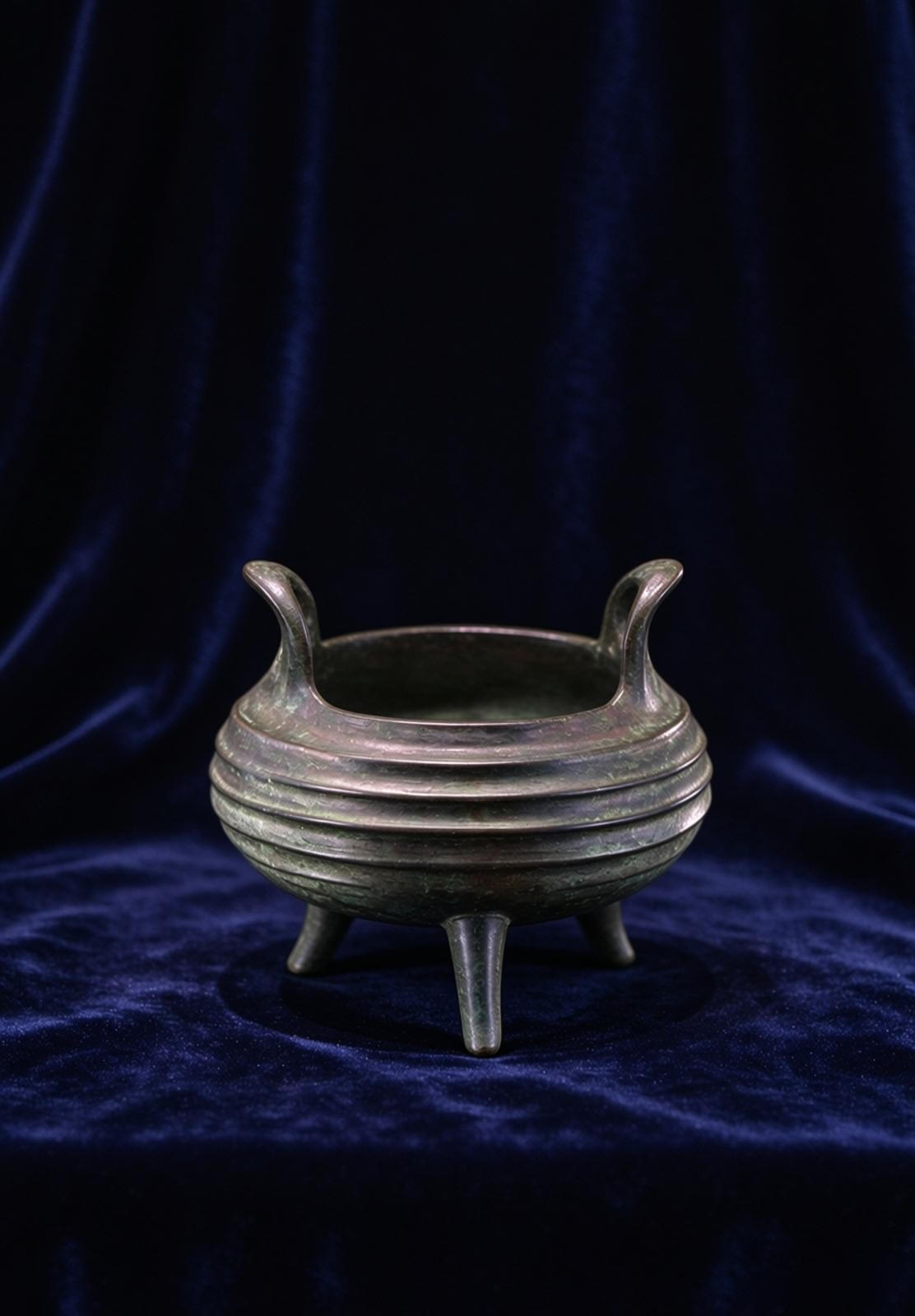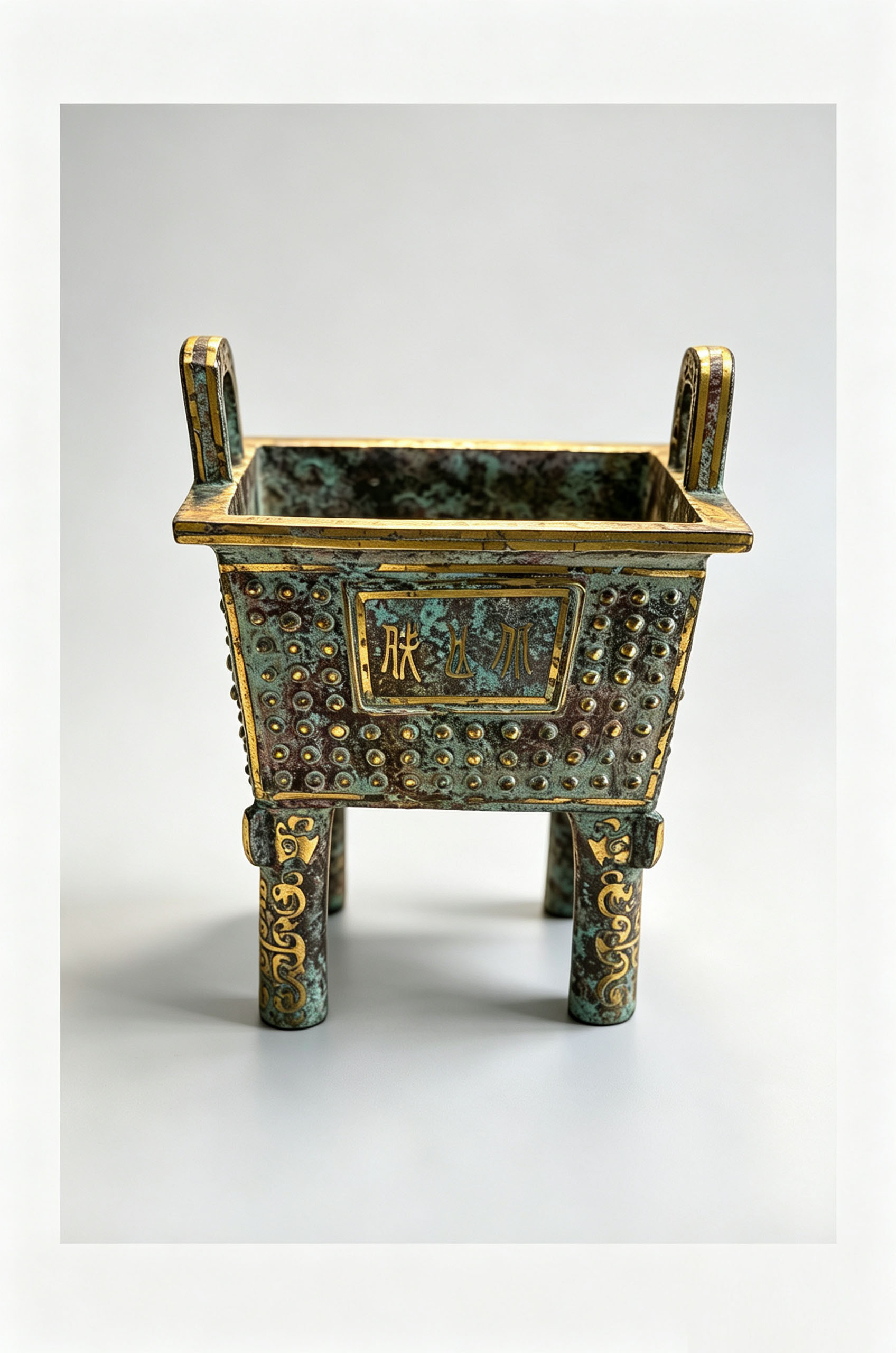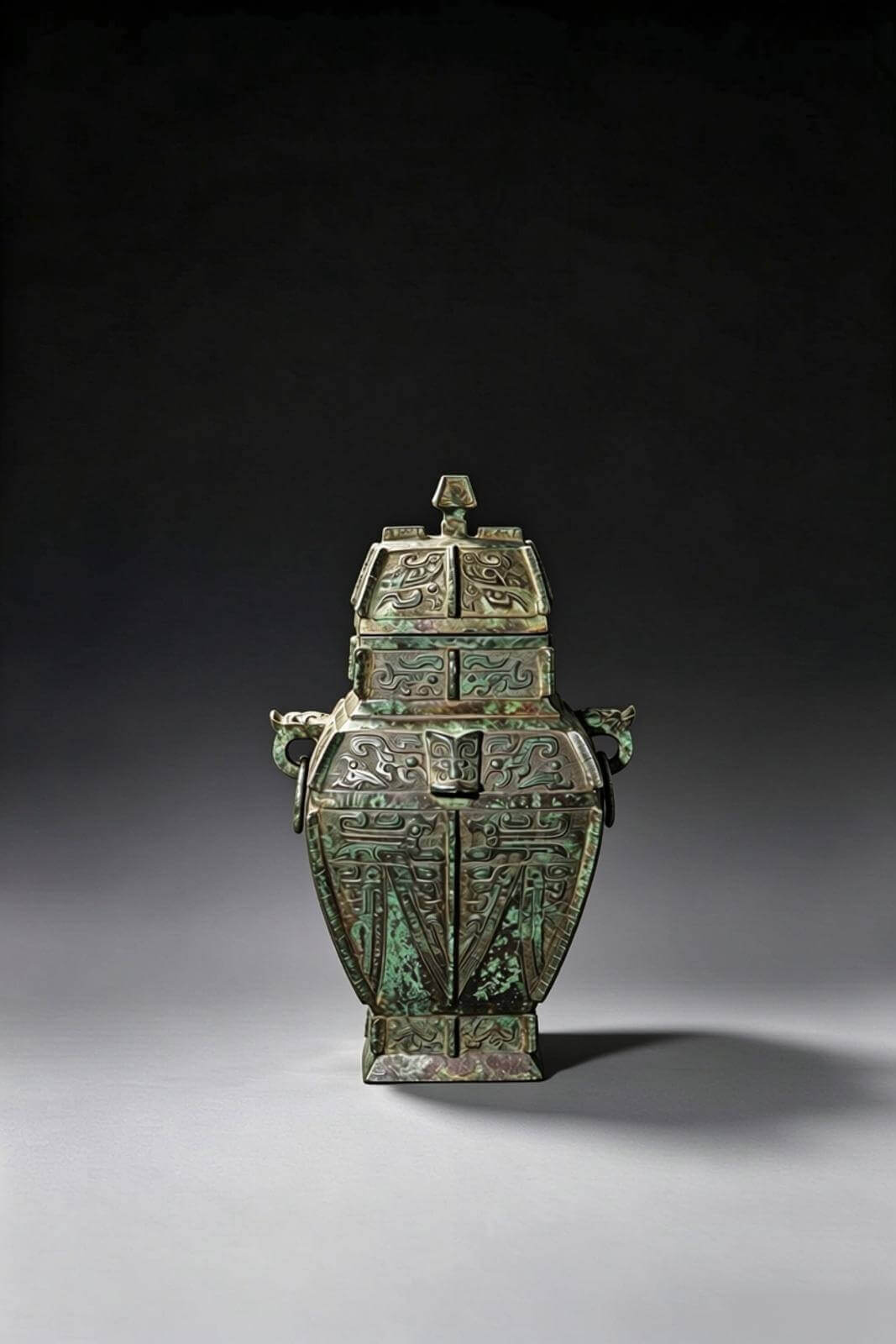
在中国铜器收藏里,有一个名字,谁都知道,但谁都不敢说自己见过真品。
它叫宣德炉。
从明代到今天,五百年里,无数人仿它。但真品到底长什么样?没人说得清。
一批铜,三千座炉
故事发生在宣德三年(1428 年)。
那一年,暹罗(今泰国)进贡了一批铜——史书上叫它"风磨铜",据说是经过风吹日晒、反复锤炼的精铜。
宣德皇帝看着这批铜,动了念头:用它铸一批香炉。
于是他下令,从宫廷画师那里出图纸,从全国调最好的铸铜匠,从内务府拨专款,铸炉。
第一批铸出来,皇帝不满意——铜质不纯、皮壳不好看。于是回炉重铸。就这样反反复复,据说炼了十二次,才终于达到标准。
最后的数量,有说三千座,有说五千座。史书里没有一个确切数字。
这就是"宣德炉"的起源。
一份档案,一场大火
传说,宣德炉铸完之后,所有图纸、档案被装进一个匣子,存在宫里。
但后来,这份档案失传了。
有人说在明末战乱中烧毁,有人说被乾隆皇帝下令销毁,还有人说从来就没有这份档案。
更麻烦的是:宣德炉本身的去向也没人说得清。
一部分留在宫里,一部分赏给大臣、寺庙,一部分流失民间。明末清初的战乱之后,绝大部分下落不明。
于是从明代中后期开始,就有人开始仿制宣德炉。到清代,"仿宣德炉"变成了一门独立的行业。
今天你在古董市场看到"宣德炉",几乎可以肯定不是宣德三年那批。但它是明代仿的、清代仿的、还是民国仿的?又是另一个问题。
各个时代的"宣德炉"
五百年里,"宣德炉"仿过一轮又一轮。每个时代的仿品,都有自己的特点。
有意思的是:明中期仿的宣德炉,今天也是古董了。而且价格不低。所以"宣德炉"这个词,已经不只是指一个时代,而是指一类器物。
今天怎么买宣德炉
如果你今天想买一口宣德炉,最实际的做法是:不追"真宣德",只追"好炉子"。
怎么看是不是好炉子?四个点:
一、铜质。上手看重量、听声音。好炉铜质细腻,手感压重,敲击声音浑厚绵长。铜质发白、发轻、声音发尖的,差。
二、皮壳。上手看颜色。好炉皮壳由内而外,深浅不一,有自然的包浆感。颜色死板、浮于表面的,是后做。
三、款识。看底款。明代款规整大方,清代款工整精细,民国款生硬。款识笔画是否自然,是最直接的时代线索。
四、造型。看整体比例。老炉线条流畅、气韵生动;新炉往往"太完美"或"太僵硬"。
真正的收藏,不是拿"宣德"两个字较劲。而是买一件工艺上乘、皮壳漂亮、年代清晰的炉子——不管它是明仿、清仿还是民国仿。
宣德炉的故事,本质上是一个"传说塑造品类"的故事。
三千座炉,六百年过去,可能只剩几座真品,甚至一座都没有。
但"宣德炉"这三个字,已经成了一个标准、一种审美、一门手艺。
比真品更持久的,是它留下的那个名字。
In Chinese bronze collecting there is one name that everybody knows — and nobody dares claim to have seen the real thing.
It is the Xuande censer.
For five hundred years, from the Ming to today, countless people have copied it. But what the genuine pieces actually look like — nobody can say clearly.
One Batch of Copper, Three Thousand Censers
The story begins in 1428, the third year of the Xuande reign.
That year, Siam (today's Thailand) sent a tribute shipment of copper — called in the records "wind-milled copper", refined by repeated weathering and hammering.
The Xuande emperor looked at the copper and had an idea: cast a set of censers from it.
He ordered designs from the court painters, summoned the best bronze casters from across the empire, and allocated special funds from the Imperial Household Department.
The first batch came out of the mould — and the emperor was not satisfied. The copper was impure, the patina unattractive. So it went back into the furnace. This repeated, and according to one account the copper was re-smelted twelve times before it met the standard.
The final count: some say three thousand censers, some say five thousand. The records give no clear number.
That is the origin of the "Xuande censer".
One Archive, One Fire
Legend says that after the censers were cast, all the drawings and records were sealed into a box and stored in the palace.
But the archive was later lost.
Some say it burned in the chaos of the late Ming; some say the Qianlong emperor ordered it destroyed; some say it never existed at all.
Worse still: nobody can account for the censers themselves.
Some stayed in the palace, some were given to ministers and temples, some leaked into private hands. After the wars of the Ming-Qing transition, the great majority disappeared.
So from the mid-Ming onward, people began making their own "Xuande censers". By the Qing, "imitating Xuande censers" had become its own industry.
When you see a "Xuande censer" in the market today, you can be almost certain it is not from 1428. But is it a Ming copy, a Qing copy, or a Republic copy? That is another question.
"Xuande Censers" of Every Era
Over five hundred years, the Xuande censer has been copied generation after generation. Each era's copies have their own character.
Interestingly: a mid-Ming copy is itself an antique today. And it is not cheap. So the term "Xuande censer" no longer refers to one era — it refers to a whole category.
How to Buy a Xuande Censer Today
If you want to buy a Xuande censer today, the practical rule is: do not chase the "real Xuande". Chase a good censer.
How to judge whether a censer is good? Four points:
First, the copper. Feel the weight, listen to the sound. Good censers have fine copper, feel heavy in hand, and ring long and deep. Whiter, lighter copper, or a sharp sound, means inferior.
Second, the patina. Look at the colour. Good patina comes from within, with layers and depth. Dead, surface-level colour is applied later.
Third, the mark. Look at the base. Ming marks are broad and generous; Qing marks are neat and fine; Republic marks are stiff. Whether the strokes feel natural is the most direct clue to period.
Fourth, the form. Look at the proportions. Old censers have flowing lines and lively presence; new ones are often "too perfect" or "too stiff".
Real collecting is not about fighting over the word "Xuande". It is about buying a piece with fine craft, beautiful patina, and clear period — whether Ming, Qing, or Republic.
The story of the Xuande censer is, at heart, a story of legend creating a category.
Three thousand censers, six centuries on — perhaps only a few survive, perhaps none.
But the three characters "Xuande censer" have become a standard, an aesthetic, a craft tradition.
What lasts longer than the real object is the name it left behind.