永乐三年,苏州刘家港。两百多艘船在江面列阵,主舰高得像一座楼。船上站的这个人叫郑和,三十二岁,太监,即将带着这支庞大的舰队驶向"西洋"。
后来的故事大家都听过:七下西洋,最远到了非洲。
但很少人知道,郑和带回的不只是香料和长颈鹿。还带回来一种东西——苏麻离青,一批来自波斯地区的钴料。
就是它,让永乐、宣德两朝的青花瓷,蓝得让人挪不开眼。
一批进口颜料
"苏麻离青"这名字,一听就不是中文。它是音译,来自波斯语,指的是波斯卡尚地区产的一种钴矿。
这东西烧出来的蓝色,跟中国本土的钴料完全不一样。
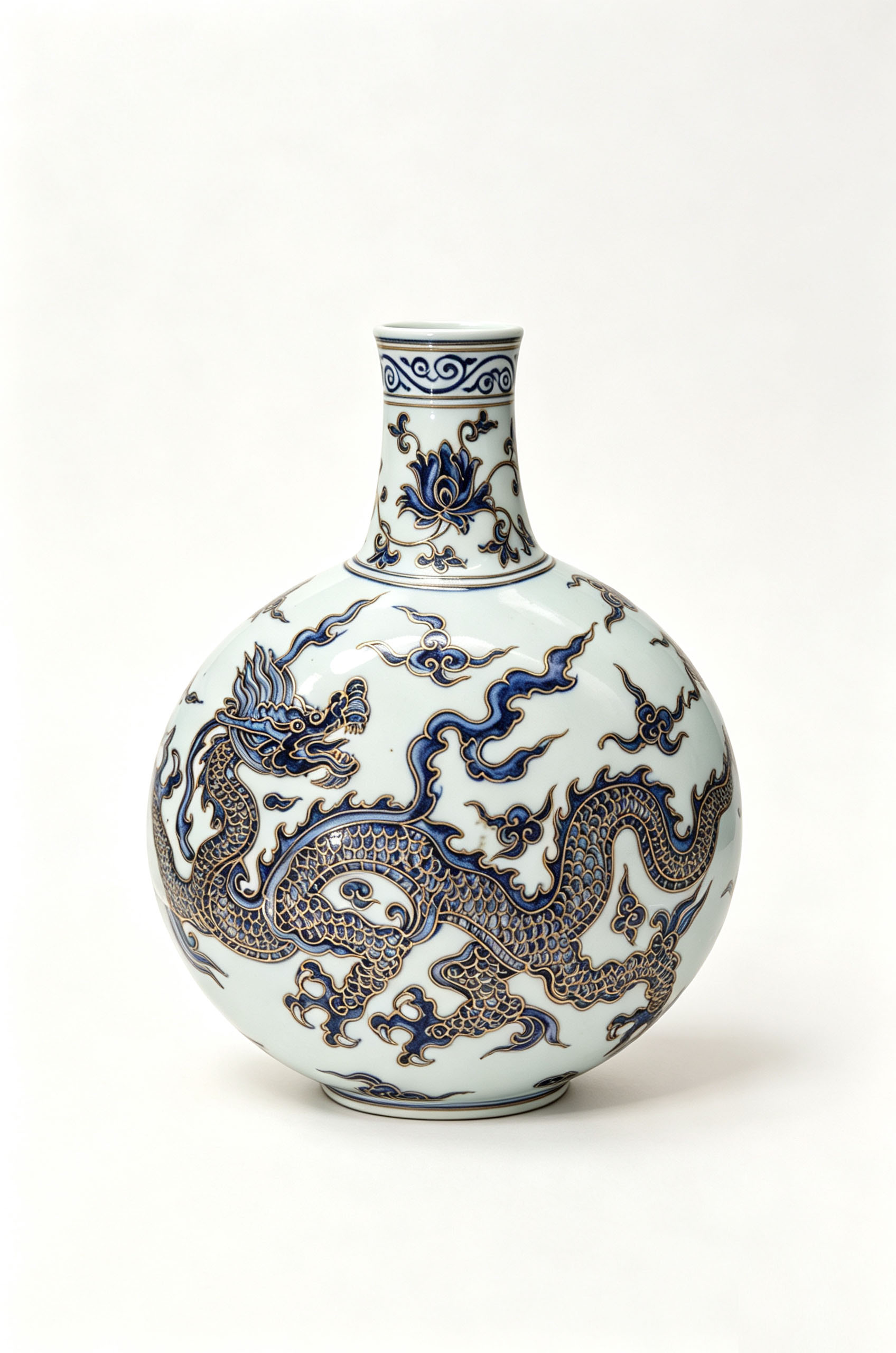
国产料含锰高,发色偏灰、偏淡,像阴天的湖水。波斯料含铁高,发色浓艳深沉,像深夜的靛蓝,浓的地方还带黑斑。当时景德镇的窑工一上手就知道:这料是宝贝。
郑和第二次下西洋(1407 年),船队开始带回成批的波斯钴料。此后二十年,永宣官窑几乎全靠它。
说白了,这事儿是个意外。郑和出海是为了宣扬国威、采购香料,钴料只是顺路带回来的副产品。但正是这个副产品,让中国青花史上出现了一个至今无法复刻的高峰。
它到底特别在哪
把一件永乐青花和一件成化青花摆在一起,一眼就能看出区别。
永乐的蓝,浓,深,像墨汁滴进清水里化开。成化的蓝,淡,雅,像雨后的天青色。
前者用的是苏麻离青,后者用的是国产平等青。一个浓得化不开,一个淡得刚刚好。没有谁好谁坏,就是两种气质。
行家认永宣青花,主要看三样东西:
一是铁锈斑。浓处烧出黑色结晶,陷进釉里,光下看有金属光。这是钴料含铁高留下的"签名"。
二是晕散。青花边缘往外化,像宣纸上洇开的墨。竹叶、云纹、莲花,边都不清不楚。
三是深浅变化。同一笔里颜色有浓有淡,不均匀。后来的仿品往往"太干净",一眼假。
然后它就没了
宣德十年(1435 年),皇帝驾崩,只有三十八岁。两年前,郑和也死在了最后一次远航的路上。
明朝的海上政策一下子收紧:宝船不造了,航线废了,朝贡国削减了。
钴料,跟着断了。
景德镇的窑工没办法,只好改用国产料。青花发色,一夜之间从浓艳变成淡雅。中国青花瓷最辉煌的那一页,就这么合上了。
后来明清两代,无数人想仿永宣青花。乾隆仿、晚清仿、民国仿、现在还在仿。但苏麻离青已经没了,那个蓝再也烧不出来。所有的仿品,本质上是用今天的口音,念一段已经消失的台词。
今天你在博物馆看到一件永乐青花,别只是看它"好看"。
想想 1405 年那支舰队——风帆、海浪、波斯商人、卡尚高原上挖矿的工人,还有景德镇窑火边一遍遍试料的窑工。
苏麻离青消失六百年了。它留下的那个蓝,一点没褪。
In 1405, at Liujiagang in Suzhou, two hundred ships assembled on the river. The flagship stood as tall as a building. Aboard was a thirty-two-year-old eunuch named Zheng He, about to lead this vast fleet into the "Western Ocean".
You probably know the rest: seven voyages, as far as Africa.
But most people don't know that Zheng He brought back more than spices and giraffes. He brought back Sumali cobalt — a shipment of ore from Persia.
And it was this that made Yongle and Xuande blue-and-white so dazzlingly blue.
An Imported Pigment
"Sumali" is not Chinese. It's a transliteration of a Persian word, referring to cobalt mined near Kashan.
This pigment fired into a blue unlike anything Chinese cobalt could produce.
Domestic cobalt is high in manganese: pale, greyish, like a lake under cloud. Persian cobalt is high in iron: deep, rich, almost indigo, with black spots where it pools thickest. Jingdezhen potters knew immediately — this was treasure.
On Zheng He's second voyage (1407), the fleet began bringing back Persian cobalt in quantity. For the next two decades, the imperial kilns of Yongle and Xuande ran on it.
In a sense, it was an accident. Zheng He sailed to project power and bring back spices. The cobalt was a by-product. But that by-product produced a peak in Chinese blue-and-white that has never been equalled.
What Made It Special
Put a Yongle piece next to a Chenghua piece and the difference is immediate.
Yongle blue is deep and saturated, like ink dropped into water. Chenghua blue is pale and clear, like the sky after rain.
The first used Sumali cobalt; the second, domestic Pingdeng. One rich, one refined. Neither better — just different in character.
To spot Yongle-Xuande blue-and-white, look for three things:
Iron-rust spots. In the darkest passages, black crystallisations sink into the glaze, catching light with a metallic sheen. This is the signature of iron-rich cobalt.
Bleed. The blue spreads outward, like ink on rice paper. Bamboo leaves, clouds, lotus scrolls — all with soft, blurred edges.
Tonal variation. Within a single stroke, the colour shifts from deep to pale. Later imitations tend to look "too clean".
And Then It Was Gone
In 1435, the Xuande emperor died at thirty-eight. Two years earlier, Zheng He had died at Calicut on his last voyage.
Ming maritime policy tightened. No more treasure ships, no more routes, no more tributary states.
And no more cobalt.
Jingdezhen potters switched to domestic sources. Overnight, the blue shifted from rich to pale. The most brilliant chapter of Chinese blue-and-white quietly closed.
For centuries afterward — Qianlong, late Qing, Republic, right up to today — potters tried to imitate Yongle-Xuande. But Sumali cobalt was gone, and that blue could not be fired again. Every imitation is, in essence, a modern voice reciting a vanished line.
Next time you see a Yongle blue-and-white in a museum, don't just admire it.
Think of that fleet in 1405 — sails, waves, Persian merchants, miners on the Kashan plateau, and potters tending kiln fires through the night, testing pigment after pigment.
Sumali cobalt vanished six hundred years ago. Its blue hasn't faded.