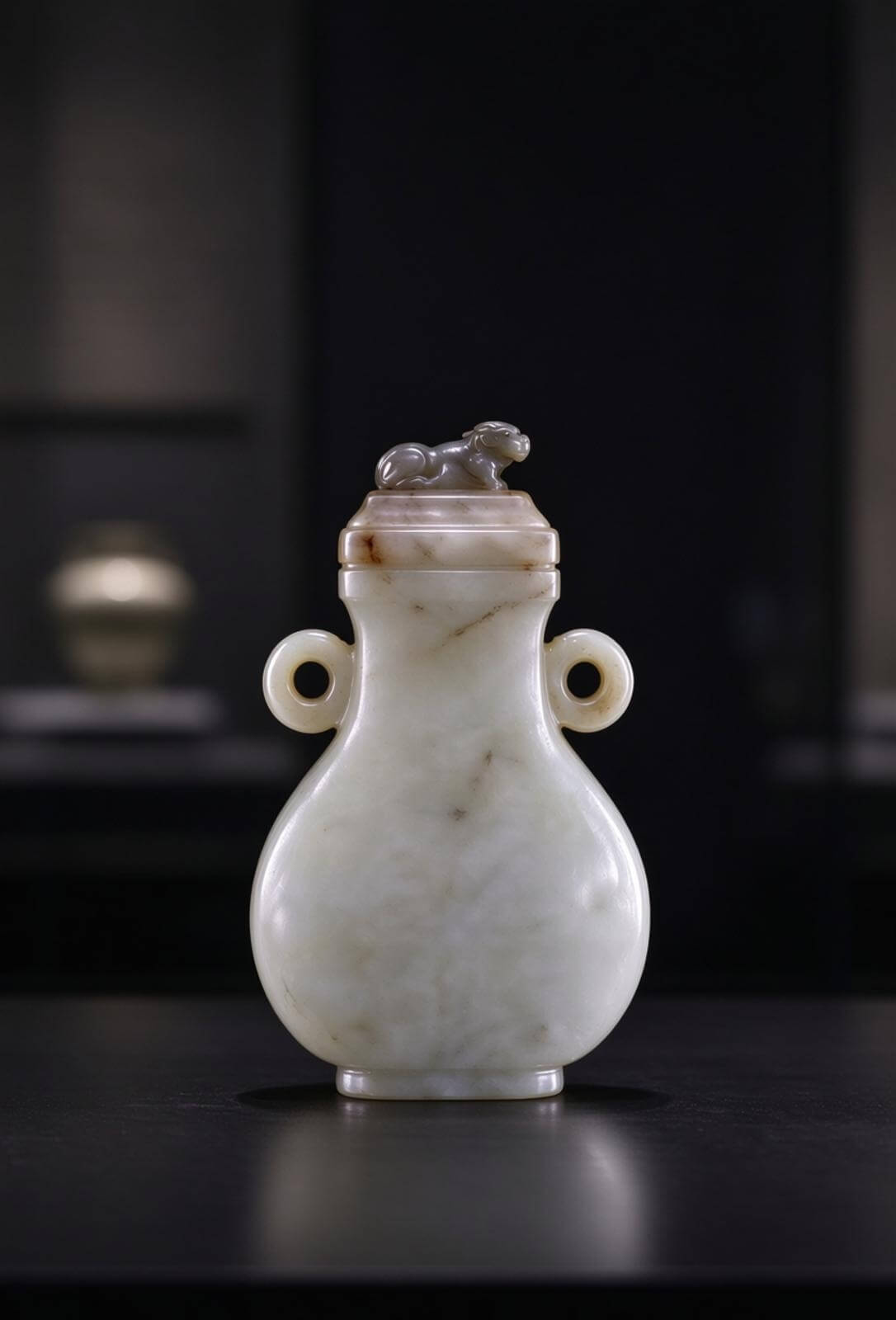
如果你问一个老新加坡人:战前的古董店开在哪里?他会告诉你——桥南路、克罗士街、河水山。
那是一个今天很难想象的年代。没有拍卖行,没有鉴定证书,没有微信群里的报价。一件瓷器从一个村子到另一个村子,靠的是挑担的货郎、来往的商船,和一张手写的货单。
然后,1942 年 2 月,一切都停了。
日军攻陷新加坡。三年零八个月里,古董商人们做了同一件事:把最好的东西藏起来。
战前:从货郎到坐商
1920 到 1930 年代,新加坡的古董生意还很原始。
卖货的人有两类。一类是印尼来的货郎,从苏门答腊的巴东坐船过来,带着爪哇、苏门答腊出土的中国贸易瓷——唐、宋、元的碗、罐、小瓶。他们住不起旅店,就在南亚旅社(South Asia Hotel)的大堂里铺一块布,摆开货物等人来看[reference:0]。
另一类是福建来的坐商,在桥南路一带开小铺子,卖的是从国内运来的景德镇瓷器、漆器、木雕。1930 年代,一个叫董俊竞的潮州年轻人,带着两只装满刺绣针线的锡箱子来到新加坡,在里峇峇利路租下一间店面,创办了"诗家董"(C.K. Tang),卖的就是中国工艺品和古董[reference:1]。
同一条街上,还有一个叫江祥满的汕头人,后来在克力路开了"东门昇古董店",门口挂的横幅写着:"我们买的是垃圾,卖的是古董"[reference:2]。
那是一个门槛很低的年代。你不需要学历,不需要资本,只需要一双认货的眼睛,和一张敢开口的嘴。
日据:藏货的人
1942 年 2 月 15 日,新加坡投降。日军将这座岛改名"昭南岛"。
古董铺子全部关门。但关门不等于放弃。
一个叫韩槐准的海南人,在这场浩劫中扮演了一个特殊的角色。韩槐准 1915 年南下新加坡,1936 年买下了三巴旺路的一片红毛丹园,取名"愚趣园"[reference:3]。他是考古学家、瓷器专家,也是徐悲鸿在南洋最信任的朋友之一。
1937 年中日战争爆发后,徐悲鸿携带大批画作和藏品来到南洋,举办展览卖画筹款[reference:4]。1941 年日军轰炸新加坡,徐悲鸿躲进愚趣园,把自己带来的书画、瓷器、玉器和印章全部托付给韩槐准保管[reference:5]。
韩槐准把这些东西藏了整整八年。1949 年,这批藏品才完好地交回徐悲鸿手中[reference:6]。
不是每个人都能像韩槐准那样幸运。日据期间,莱佛士图书馆暨博物馆的藏品遭到严重破坏和流失。战后,助理研究员特韦迪的首要工作就是清点损失、追踪下落,作为战后审判的依据之一[reference:7]。
战后:重新开张
1945 年 9 月,日军投降。新加坡的古董铺子一间一间重新开张。
但市场已经变了。战争期间,许多富裕家庭逃离新加坡,家中的器物或带走、或留下。战后回来,有些人发现东西不见了,有些人发现东西还在,但已经不需要了。
这造就了一波特殊的货源。你会在一家铺子里同时看到:一只清代的青花碗,旁边放着一把英军留下的军用水壶;一个娘惹家庭的银制槟榔盒,叠着一本 1945 年的新加坡地图。
与此同时,一批新的收藏者出现了。
银行家刘作筹、社团领袖黄曼士、胡椒商人陈之初、商人杨启霖——这四位后来被称为新加坡"四大收藏家"的人物,收藏生涯大多起步于 1930 至 1940 年代,战后进入鼎盛期[reference:8]。
黄曼士的"百扇斋"以徐悲鸿、齐白石、任伯年的画为主。他 1923 年到新加坡,任南洋烟草公司新加坡分行总经理,经商之余收藏书画[reference:9]。徐悲鸿 1925 年在法国读书时经济窘迫,是黄曼士的兄弟黄孟圭资助了他。此后徐悲鸿多次到南洋,都住在黄家[reference:10]。
陈之初则是另一种路径。他是土生新加坡人,自幼学书法,后来跟潮州商人林树森做事,娶了林家的女儿。他的"香雪庄"最多时藏品逾千件,从上古到近现代都有[reference:11]。1960 年代,新加坡还没有美术馆,刘抗等第一代画家想看好画,就去陈之初家里看[reference:12]。
战后三十年:从旧货到拍卖
战后到 1970 年代,新加坡的古董生意经历了一次转型。
战前那种"货郎摆摊"的模式逐渐消失。取而代之的,是有固定店面的专业商人。1969 年,吴永昌在新加坡开设了"灿艺(利记)公司",专营中国古董和工艺品[reference:13]。他的父亲吴天送,正是在二战前夕从广东丰溪来到新加坡的,一开始做的是瓷器批发,把家乡的瓷器运到新加坡卖给百货公司[reference:14]。
这是两代人的故事。父亲在战前把货带进来,儿子在战后把店开起来。从批发瓷器到零售古董,从大宗货物到精挑细选,商业模式的转变,其实也是收藏观念的变化。
1993 年是一个分水岭。这一年,佳士得在新加坡举行了第一场拍卖。到 1995 年,仅佳士得一家在新加坡的拍卖成交额就达到 1640 万新元,比前一年翻了一倍多[reference:15]。
从桥南路的小铺子到佳士得的拍卖台,新加坡古董商走过了七十年。这七十年的起点,是那些在战火中把东西藏起来的人。
古董商这个行业,说到底做的是时间差。
战前的货郎从印尼小岛上买一只宋碗,战后的商人从离散家庭里收一件娘惹银器,今天的藏家从拍卖行里拍一幅徐悲鸿——他们做的其实是同一件事:在一个东西还不被重视的时候把它认出来,在别人不要的时候把它收下来。
二战前后那批商人,经历了这个行业最剧烈的断裂与重建。他们从货郎变成坐商,从批发变成零售,从被战争打断到战后重新开始。
下次你在桥南路一间老铺里翻看一件瓷器时,不妨问一句:它是什么时候到新加坡的?答案里,可能有一段比瓷器本身更长的故事。
Ask an older Singaporean where the antique shops were before the war, and they'll tell you: South Bridge Road, Cross Street, Havelock Road.
It was an era hard to imagine today. No auction houses. No authentication certificates. No WeChat groups trading price quotes. A piece of porcelain travelled from village to village on the backs of peddlers, on trading ships, and on a handwritten bill of lading.
Then, in February 1942, everything stopped.
Japanese forces captured Singapore. For three years and eight months, antique dealers all did the same thing: they hid their best pieces.
Before the War: From Peddlers to Shopkeepers
In the 1920s and 1930s, Singapore's antique trade was still rudimentary.
There were two kinds of sellers. The first were Indonesian peddlers, arriving by boat from Padang in Sumatra, carrying Chinese trade ceramics excavated in Java and Sumatra — Tang, Song, and Yuan bowls, jars, and small vases. They couldn't afford hotels, so they spread cloth in the lobby of the South Asia Hotel on Bencoolen Street and laid out their wares for buyers[reference:16].
The second were settled merchants from Fujian, running small shops along South Bridge Road, selling Jingdezhen porcelain, lacquerware, and wood carvings shipped from China. In the 1930s, a young Teochew named Tang Choon Keng arrived in Singapore with two tin trunks full of embroidery needles and thread, rented a shop on River Valley Road, and founded C.K. Tang, selling Chinese crafts and antiques[reference:17].
On the same street, a Shantou native named Keng Ah Tong later opened the Tong Mern Sern antique shop on Craig Road, with a banner outside that read: "We Buy Junk And Sell Antique"[reference:18].
It was an era of low barriers. You didn't need a degree or capital. You needed an eye for recognising things, and the nerve to open your mouth.
Occupation: Those Who Hid Things
On 15 February 1942, Singapore surrendered. The Japanese renamed the island Syonan-to.
Antique shops all closed. But closing didn't mean giving up.
A Hainanese named Han Wai Toon played a special role in this catastrophe. Han had arrived in Singapore in 1915 and in 1936 bought a rambutan plantation on Old Sembawang Road, naming it Yu Qu Yuan — "The Garden of Foolish Indulgences"[reference:19]. He was an archaeologist, a porcelain specialist, and one of Xu Beihong's most trusted friends in Nanyang.
After the Sino-Japanese War broke out in 1937, Xu Beihong brought a large collection of paintings and antiques to Nanyang, holding exhibitions and selling works to raise funds[reference:20]. When Japanese bombs fell on Singapore in 1941, Xu hid at Yu Qu Yuan and entrusted his paintings, porcelain, jades, and seals to Han Wai Toon for safekeeping[reference:21].
Han kept these items hidden for eight years. In 1949, the collection was returned to Xu Beihong intact[reference:22].
Not everyone was as fortunate as Han. During the occupation, the Raffles Library and Museum suffered severe losses. After the war, assistant researcher Tweedie's first task was to inventory wartime damage and track missing items as evidence for post-war trials[reference:23].
After the War: Reopening
In September 1945, Japan surrendered. Antique shops reopened one by one.
But the market had changed. During the war, many wealthy families had fled Singapore, taking some possessions and leaving others behind. When they returned after the war, some found things missing. Others found things still there — but no longer needed.
This created a peculiar wave of supply. You could walk into a shop and see, side by side: a Qing blue-and-white bowl next to a British army water bottle; a Peranakan silver betel box stacked on top of a 1945 map of Singapore.
At the same time, a new generation of collectors emerged.
Banker Liu Kang, community leader Huang Manshi, pepper merchant Tan Tsze Chor, and businessman Yang Qilin — the four figures later known as Singapore's "Four Great Collectors" — mostly began collecting in the 1930s and 1940s, reaching their peak after the war[reference:24].
Huang Manshi's "Baishan Studio" focused on works by Xu Beihong, Qi Baishi, and Ren Bonian. He arrived in Singapore in 1923 as general manager of Nanyang Tobacco Company's Singapore branch, collecting paintings in his spare time[reference:25]. When Xu Beihong was struggling financially in Paris in 1925, it was Huang's brother Huang Menggui who helped him. After that, whenever Xu came to Nanyang, he stayed at the Huang home[reference:26].
Tan Tsze Chor took a different path. Born in Singapore, he studied calligraphy from childhood, later worked for Teochew merchant Lim Soo Seng, and married his daughter. At its peak, his "Xiangxue Studio" held over a thousand pieces, spanning from antiquity to the modern era[reference:27]. In the 1960s, Singapore had no art museum. When first-generation painters like Liu Kang wanted to see good paintings, they went to Tan's home[reference:28].
Three Decades After the War: From Junk to Auctions
From the post-war period to the 1970s, Singapore's antique trade underwent a transformation.
The pre-war "peddler with a cloth" model gradually disappeared. In its place came professional merchants with permanent shops. In 1969, Goh Yong Chiang opened Chan Ngee Trading Co in Singapore, specialising in Chinese antiques and crafts[reference:29]. His father, Goh Tiang Siang, had arrived from Fengxi in Guangdong just before the war, initially wholesaling porcelain from his hometown to Singapore department stores[reference:30].
This is a story of two generations. The father brought goods in before the war; the son opened a shop after it. From wholesaling ceramics to retailing antiques, from bulk goods to carefully selected pieces — the shift in business model was also a shift in how people thought about collecting.
1993 was a watershed. That year, Christie's held its first auction in Singapore. By 1995, Christie's alone generated S$16.4 million in Singapore auction sales, more than double the previous year[reference:31].
From a small shop on South Bridge Road to Christie's auction podium, Singapore's antique dealers had travelled seventy years. The starting point of those seventy years was the people who hid things during the war.
The antique trade, at its core, is about time arbitrage.
A pre-war peddler buying a Song bowl on an Indonesian island, a post-war dealer acquiring Peranakan silver from a displaced family, a collector today bidding on a Xu Beihong at auction — they are all doing the same thing: recognising something before it is valued, acquiring it when others don't want it.
The dealers around World War II experienced the most violent rupture and reconstruction this trade has ever known. They went from peddlers to shopkeepers, from wholesale to retail, from being interrupted by war to starting again after it.
Next time you're leafing through a piece of porcelain in an old shop on South Bridge Road, ask: when did it arrive in Singapore? The answer may contain a story longer than the object itself.